
An electrical outlet that feels hot to the touch is never normal. A warm outlet can signal faulty wiring, an overloaded circuit, a failing device, or loose connections creating electrical resistance and excess heat.
If your electrical outlet feels hot, the short answer is this: something is not right. Even a warm electrical outlet deserves attention.
Heat usually means the flow of electricity is meeting extra electrical resistance somewhere in the circuit. That resistance turns electricity into unwanted heat buildup. A phone charger or small device may make an outlet feel warm after hours of use, but a hot outlet that is uncomfortable or painful to touch is a warning sign.
Burning odor, buzzing, scorch marks, discoloration, or an outlet plate hot to the touch all raise the risk of an electrical fire. The cause may be the outlet, the wiring connections inside the wall, or the plug and appliances using power.
Act calmly, but do not ignore it.
If you are unsure which breaker controls the outlet, Ragsdale can help you by phone. This is not like a website performing security verification, security verification, verification successful, malicious bots, or respond ray id message. This is a real electrical problem in your home's electrical system.
There is no single reason an outlet hot condition happens. Common causes of hot outlets include overloaded circuits, loose or damaged wiring, and high-amperage appliances. Often, the causes overlap. For example, space heaters on an old receptacle can overheat older or loose outlets fast.
An overloaded circuit is one of the most frequent causes of hot electrical outlets, as exceeding the designed electrical load can lead to overheating. Most home circuits are 15 or 20 amps. Too many devices on the same circuit can push past what the circuit was built to handle.
Space heaters, hair dryers, microwaves, and window AC units are high-wattage appliances. High-wattage appliances, like space heaters and hair dryers, can draw more electricity than standard outlets are designed to handle, causing them to overheat. Warning signs include a tripping breaker, flickering lights, and multiple outlets that feel warm.
Reduce the load, unplug high-power devices, and avoid daisy-chained power strips. Ragsdale can map the same circuit, check the electrical load, add dedicated circuits, or upgrade the electrical panel.
Loose wiring behind an electrical outlet increases resistance, which creates extra heat. Loose or damaged wiring can cause electrical resistance, leading to heat generation and potentially sparking, which increases the risk of electrical fires.
Common issues include backstabbed wiring, wires loose under screws, brittle insulation, and aluminum wiring. Aluminum wiring, common in homes built between the mid-1960s and mid-1970s, is prone to overheating due to expansion and contraction.
Melted insulation can expose bare copper wiring, leading to short circuits. Do not pull the outlet out yourself. A professional electrician checks wiring, tightens connections, replaces unsafe parts, and follows current Georgia code.
Faulty electrical components, such as worn-out outlets or connectors, can degrade over time, leading to loose connections and overheating. Older outlets may not grip a plug tightly, especially after decades of use.
Look for loose plugs, cracked plastic, yellowing, melted spots, scorch marks, or a faceplate that feel warm during light use. Children tugging cords, furniture pressing plugs, and frequent plug changes make wear worse.
Ragsdale can replace damaged outlets, test grounding, and install modern grounded, AFCI, or gfci outlet protection where needed.
Sometimes the outlet is not the only problem. A faulty plug, old phone charger, laptop brick, damaged cord, or overloaded power strip can make an outlet feel warm.
Unplug the device and let the single outlet cool for 30 to 60 minutes. Check for frayed cords, exposed copper, bent prongs, or blackened prongs. Throw away damaged extension cords and overloaded strips. To prevent overheating, reduce your use of power strips and avoid plugging too many high-power devices into one outlet.
Improper installation of outlets can lead to loose connections and excess resistance, which can cause overheating and electrical hazards. DIY electrical work may leave reversed hot and neutral wires, missing junction boxes, undersized wiring, or unsafe piggy-backed receptacles.
Even if the outlet works, improper installation can fail under heavy load. Ragsdale can inspect past repairs, identify unsafe work, and document needed corrections. We respect that homeowners compare brands, including mister sparky, but our focus is safe, local repair.
A warm outlet with nothing plugged in is more serious than one warming during heavy use. If the outlet stays hot with no connected devices, heat may be coming from shared wiring, downstream loads, loose connections inside the box, a dimmer switch, or failing backstabbed wiring.
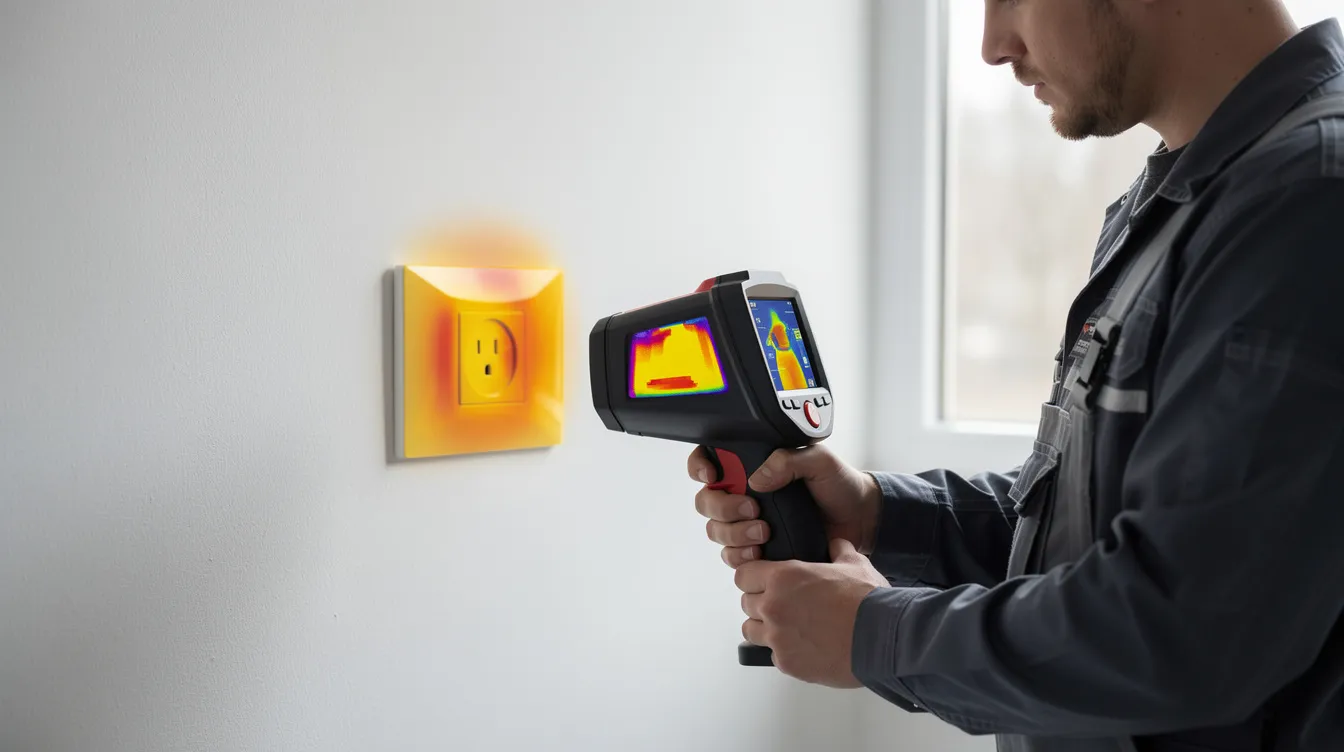
Turn off the breaker and schedule service. Ragsdale electricians use circuit testers and thermal cameras to trace hidden heat before it becomes a fire hazard.
Not every warm outlet is an emergency, but these signs are urgent:
Immediate action should be taken if an outlet is hot, has a burning smell, or shows discoloration. If you notice scorch marks, a burning smell, or if the outlet is too hot to touch, do not use it and contact a licensed electrician for inspection and repair.
We start with safety. Our electrician verifies the correct breaker is off, tests for live voltage, checks the outlet face, and inspects the wall for heat damage.
Then we remove the receptacle, inspect wiring connections, look for aluminum wiring, check for overheating, and test related switches and other outlets on the same circuit. We also review breaker size, load, and whether high-amperage appliances need dedicated circuits.
Solutions may include replacing the outlet, correcting loose wiring, redistributing load, installing dedicated circuits, or upgrading the panel. You get upfront pricing, clear options, and strong parts and labor warranties.
Prevention protects your home and avoids emergency calls.
Ragsdale’s Complete Comfort Maintenance members can add routine safety checks for electrical systems during HVAC and plumbing visits.
These answers cover common service-call questions. For your specific home, call an electrician or have a licensed electrician inspect the circuit.
A tiny amount of warmth can happen with chargers or transformer-style devices. But if the outlet feel is noticeably hotter than nearby outlets, or if the outlet feels hot repeatedly, it should be checked.
Yes. A hot electrical outlet can overheat insulation, cause arcing, and ignite nearby materials. The NFPA reports thousands of home fires tied to electrical failure or malfunction.
We do not recommend it. A hot outlet often points to deeper electrical issues, not just a bad receptacle. Replacing only the outlet may hide faulty wiring, loose connections, or circuit overload.
Those devices pull heavy current. If a hot electrical outlet appears only with space heaters or hair dryers, the circuit may be overloaded or the receptacle may be too worn for that demand.
Homes older than 20 to 25 years should be inspected at least once, then every 5 to 10 years, or annually if problems appear. In Dallas, Loganville, and Metro Atlanta, Ragsdale can combine electrical, HVAC, and plumbing checks in one whole-home visit.
An electrical outlet that feels hot to the touch is never normal. A warm outlet can signal faulty wiring, an overloaded circuit, a failing device, or loose connections creating electrical resistance and excess heat.
If your electrical outlet feels hot, the short answer is this: something is not right. Even a warm electrical outlet deserves attention.
Heat usually means the flow of electricity is meeting extra electrical resistance somewhere in the circuit. That resistance turns electricity into unwanted heat buildup. A phone charger or small device may make an outlet feel warm after hours of use, but a hot outlet that is uncomfortable or painful to touch is a warning sign.
Burning odor, buzzing, scorch marks, discoloration, or an outlet plate hot to the touch all raise the risk of an electrical fire. The cause may be the outlet, the wiring connections inside the wall, or the plug and appliances using power.
Act calmly, but do not ignore it.
If you are unsure which breaker controls the outlet, Ragsdale can help you by phone. This is not like a website performing security verification, security verification, verification successful, malicious bots, or respond ray id message. This is a real electrical problem in your home’s electrical system.
There is no single reason an outlet hot condition happens. Common causes of hot outlets include overloaded circuits, loose or damaged wiring, and high-amperage appliances. Often, the causes overlap. For example, space heaters on an old receptacle can overheat older or loose outlets fast.
An overloaded circuit is one of the most frequent causes of hot electrical outlets, as exceeding the designed electrical load can lead to overheating. Most home circuits are 15 or 20 amps. Too many devices on the same circuit can push past what the circuit was built to handle.
Space heaters, hair dryers, microwaves, and window AC units are high-wattage appliances. High-wattage appliances, like space heaters and hair dryers, can draw more electricity than standard outlets are designed to handle, causing them to overheat. Warning signs include a tripping breaker, flickering lights, and multiple outlets that feel warm.
Reduce the load, unplug high-power devices, and avoid daisy-chained power strips. Ragsdale can map the same circuit, check the electrical load, add dedicated circuits, or upgrade the electrical panel.
Loose wiring behind an electrical outlet increases resistance, which creates extra heat. Loose or damaged wiring can cause electrical resistance, leading to heat generation and potentially sparking, which increases the risk of electrical fires.
Common issues include backstabbed wiring, wires loose under screws, brittle insulation, and aluminum wiring. Aluminum wiring, common in homes built between the mid-1960s and mid-1970s, is prone to overheating due to expansion and contraction.
Melted insulation can expose bare copper wiring, leading to short circuits. Do not pull the outlet out yourself. A professional electrician checks wiring, tightens connections, replaces unsafe parts, and follows current Georgia code.
Faulty electrical components, such as worn-out outlets or connectors, can degrade over time, leading to loose connections and overheating. Older outlets may not grip a plug tightly, especially after decades of use.
Look for loose plugs, cracked plastic, yellowing, melted spots, scorch marks, or a faceplate that feel warm during light use. Children tugging cords, furniture pressing plugs, and frequent plug changes make wear worse.
Ragsdale can replace damaged outlets, test grounding, and install modern grounded, AFCI, or gfci outlet protection where needed.
Sometimes the outlet is not the only problem. A faulty plug, old phone charger, laptop brick, damaged cord, or overloaded power strip can make an outlet feel warm.
Unplug the device and let the single outlet cool for 30 to 60 minutes. Check for frayed cords, exposed copper, bent prongs, or blackened prongs. Throw away damaged extension cords and overloaded strips. To prevent overheating, reduce your use of power strips and avoid plugging too many high-power devices into one outlet.
Improper installation of outlets can lead to loose connections and excess resistance, which can cause overheating and electrical hazards. DIY electrical work may leave reversed hot and neutral wires, missing junction boxes, undersized wiring, or unsafe piggy-backed receptacles.
Even if the outlet works, improper installation can fail under heavy load. Ragsdale can inspect past repairs, identify unsafe work, and document needed corrections. We respect that homeowners compare brands, including mister sparky, but our focus is safe, local repair.
A warm outlet with nothing plugged in is more serious than one warming during heavy use. If the outlet stays hot with no connected devices, heat may be coming from shared wiring, downstream loads, loose connections inside the box, a dimmer switch, or failing backstabbed wiring.
Turn off the breaker and schedule service. Ragsdale electricians use circuit testers and thermal cameras to trace hidden heat before it becomes a fire hazard.
Not every warm outlet is an emergency, but these signs are urgent:
Immediate action should be taken if an outlet is hot, has a burning smell, or shows discoloration. If you notice scorch marks, a burning smell, or if the outlet is too hot to touch, do not use it and contact a licensed electrician for inspection and repair.
We start with safety. Our electrician verifies the correct breaker is off, tests for live voltage, checks the outlet face, and inspects the wall for heat damage.
Then we remove the receptacle, inspect wiring connections, look for aluminum wiring, check for overheating, and test related switches and other outlets on the same circuit. We also review breaker size, load, and whether high-amperage appliances need dedicated circuits.
Solutions may include replacing the outlet, correcting loose wiring, redistributing load, installing dedicated circuits, or upgrading the panel. You get upfront pricing, clear options, and strong parts and labor warranties.
Prevention protects your home and avoids emergency calls.
Ragsdale’s Complete Comfort Maintenance members can add routine safety checks for electrical systems during HVAC and plumbing visits.
These answers cover common service-call questions. For your specific home, call an electrician or have a licensed electrician inspect the circuit.
A tiny amount of warmth can happen with chargers or transformer-style devices. But if the outlet feel is noticeably hotter than nearby outlets, or if the outlet feels hot repeatedly, it should be checked.
Yes. A hot electrical outlet can overheat insulation, cause arcing, and ignite nearby materials. The NFPA reports thousands of home fires tied to electrical failure or malfunction.
We do not recommend it. A hot outlet often points to deeper electrical issues, not just a bad receptacle. Replacing only the outlet may hide faulty wiring, loose connections, or circuit overload.
Those devices pull heavy current. If a hot electrical outlet appears only with space heaters or hair dryers, the circuit may be overloaded or the receptacle may be too worn for that demand.
Homes older than 20 to 25 years should be inspected at least once, then every 5 to 10 years, or annually if problems appear. In Dallas, Loganville, and Metro Atlanta, Ragsdale can combine electrical, HVAC, and plumbing checks in one whole-home visit.
Receive updates, current news, promotions, and industry tips.